Marrakech is rich in colour, pattern and stories, but adding local ornament does not automatically create a strong identity. A brand first needs a clear position: who it serves, what it promises and why a customer should trust it among the city’s many choices.
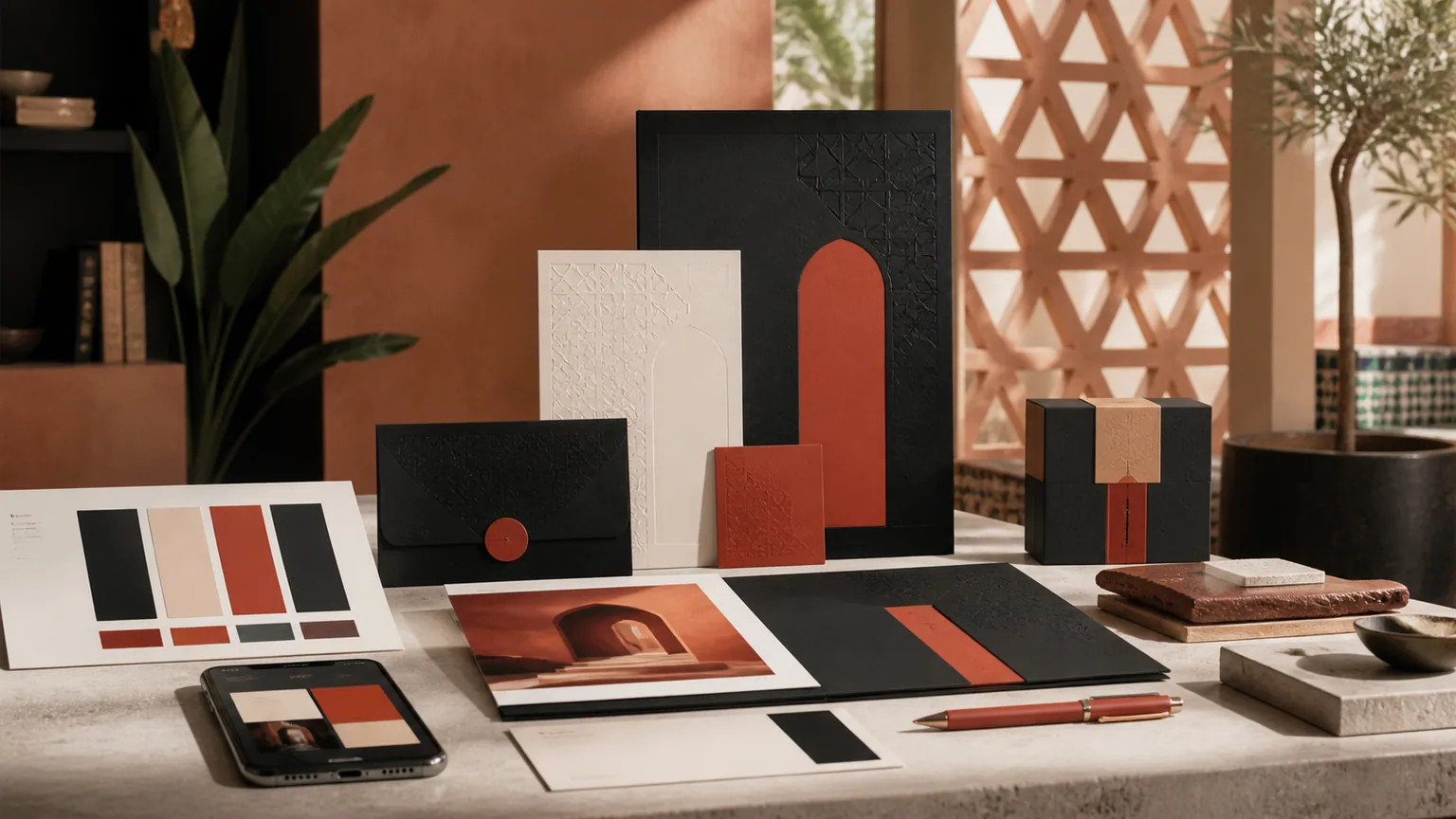
Visual identity translates that position into a system of logo, colour, typography, imagery and layout. Its strength becomes visible when the business remains recognisable and coherent on a small sign, a phone screen, a menu, packaging and the physical customer experience.
Begin with brand strategy, not a logo sketch
Define the priority audience and the context in which they discover the business, whether they are international guests, local customers or organisations selecting a partner. Write a credible promise, a clear voice and a defined personality. Visual choices can then communicate strategy rather than personal taste.
- Priority audience and need.
- A promise supported by evidence.
- Brand personality and verbal tone.
- A meaningful distinction from competitors.
Draw from Marrakech without imitation
Architecture, craft, light and materials can inspire rhythm, texture and colour, but they should be interpreted for the specific business. Avoid collecting many symbols or copying a familiar tourist aesthetic. A trusted identity selects one meaningful idea and applies it with restraint while keeping Arabic and Latin scripts readable.
- A documented visual reference tied to the story.
- Colours that work in print and on screens.
- Balanced Arabic and Latin typography.
- Original imagery reflecting the real experience.
Design a system for real touchpoints
Test the identity in realistic situations before approval: a small profile image, mobile booking, signage, menus, cards, packaging and email. Prepare appropriate logo versions and rules for spacing, minimum size and contrast. A good system supports variety without losing recognition.
- Primary, horizontal and compact logo versions.
- Flexible templates for offers and content.
- Interface contrast and legibility rules.
- A consistent approach to icons and photography.
Turn guidelines into daily practice
A brand book has little value if the team cannot use it. Keep guidance concise, provide the correct files and assign ownership for review. Train employees and suppliers who publish or produce materials, then audit major touchpoints periodically so small inconsistencies do not become an accidental new style.
- An organised, current asset library.
- Templates for recurring work.
- Examples of correct and incorrect use.
- A quick approval route for important applications.
Marrakech identity checklist
- Test the logo at small size and in monochrome.
- Review Arabic and French or English readability.
- Confirm that imagery represents the real experience.
- Apply the system to five genuine touchpoints.
- Deliver practical assets and guidance to the team.
Frequently asked questions
Is visual identity just the logo?
No. The logo is one identifying element within a broader system of colour, type, imagery, layout and application rules. Consistency across the system builds recognition and trust.
Must every Marrakech brand use local symbols?
No. A local reference is valuable only when it supports the business story and audience. A simpler contemporary direction can sometimes be more distinctive and honest.
Next step
If you want to turn these steps into a practical plan for your business, explore FoxDigia services or contact us to define the right starting point.
Explore our services · Contact us
FoxDigia Team
FoxDigia Team specializes in building brand identities, website design, digital marketing, and improving businesses' presence in Morocco and the Gulf.