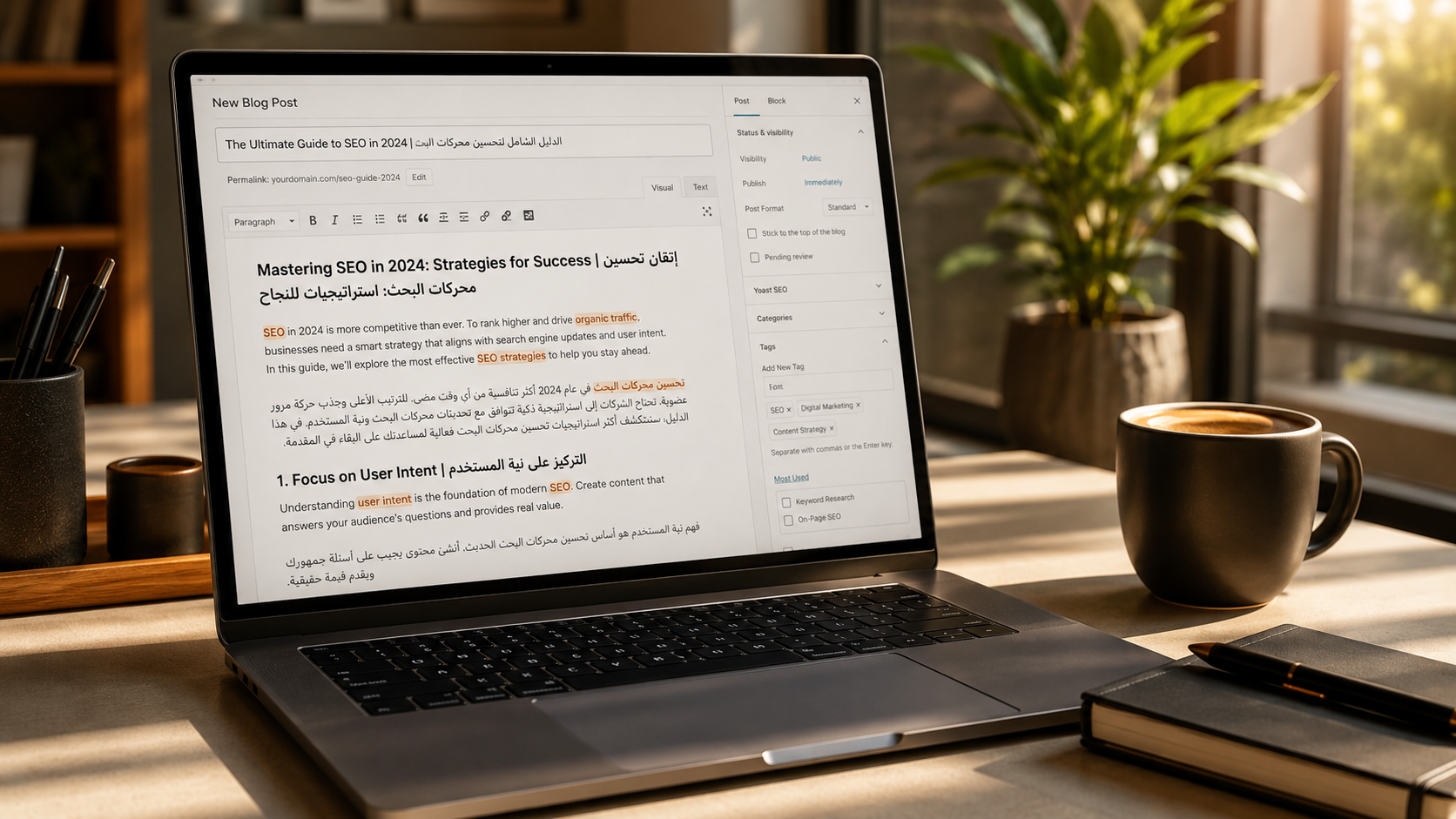
Content for Gulf and Maghreb markets does not become useful by swapping city names or literally converting one text between Arabic, French and English. Each market has different terminology, decision context and expectations, while the core requirement remains a trustworthy answer. Begin with genuine expertise and service, then decide whether a separate page is warranted.
Research intent and language within each market
Collect customer questions, search results and site data, and understand differences between formal Arabic, local usage and French without forcing dialect terms. Start with search intent rather than keyword volume alone. Collect questions from customers, search results and Search Console, then classify them as informational, comparative, commercial or local. Group wording that serves the same intent into one complete page. Do not create a page for every city or small variation unless the business offers a genuine service and useful local information.
Outline the answer before expanding the article
State the useful answer early, then cover decision factors, steps, risks and questions according to reader needs rather than an arbitrary word target. Make the page the easiest result to understand: an accurate title, an early answer, logical sections, verifiable evidence and clear responsibility for the content. Use natural terms in every language without stuffing. Internal links should lead to relevant services or explanations, while canonical, hreflang and sitemap signals should consistently name the real preferred URLs.
Edit for accuracy, trust and originality
Use a subject reviewer, remove unsupported numbers and results, and state limitations when laws, prices or practices may differ between markets. Review technical foundations from both crawler and visitor perspectives: correct status codes, accessible important resources, stable mobile performance, and no internal links to errors or redirect chains. Include only preferred indexable pages in the sitemap. An indexing request is useful after a meaningful change, but it is not a substitute for fixing a thin or duplicate page.
Publish, connect and update using evidence
Link the article to the appropriate service and reliable references, observe queries and behaviour, and update when information changes rather than changing the date. Measure outcomes by query, page and business purpose. Track impressions and clicks, then examine visit quality and qualified enquiries. Improve pages that already match clear intent and earn useful impressions before producing more. A refresh should add information, evidence or clarity; changing a date or automatically paraphrasing text does not create new value.
Mistakes to avoid
- Creating many pages for minor keyword variations.
- Buying or exchanging unnatural links.
- Treating an indexing request as a fix for weak content.
Practical implementation checklist
- Define the market, audience and genuine service.
- Collect real questions before keywords.
- Edit every language independently.
- Add a relevant internal link and reliable source.
- Assign an owner and sensible review point.
Frequently asked questions
How long does SEO take?
There is no guaranteed period. The site condition, competition, crawling and page quality all matter. Measure trends over a suitable window and connect them to documented changes.
Can first position be guaranteed?
No. A provider can commit to sound practice, useful content and transparent measurement, but a permanent rank cannot be promised because context, competition and systems change.
Trusted references
Next step
To prioritise indexing, content and search opportunities, explore FoxDigia SEO services and contact us with the relevant pages and available data. Explore services · Contact us
FoxDigia Team
FoxDigia Team specializes in building brand identities, website design, digital marketing, and improving businesses' presence in Morocco and the Gulf.