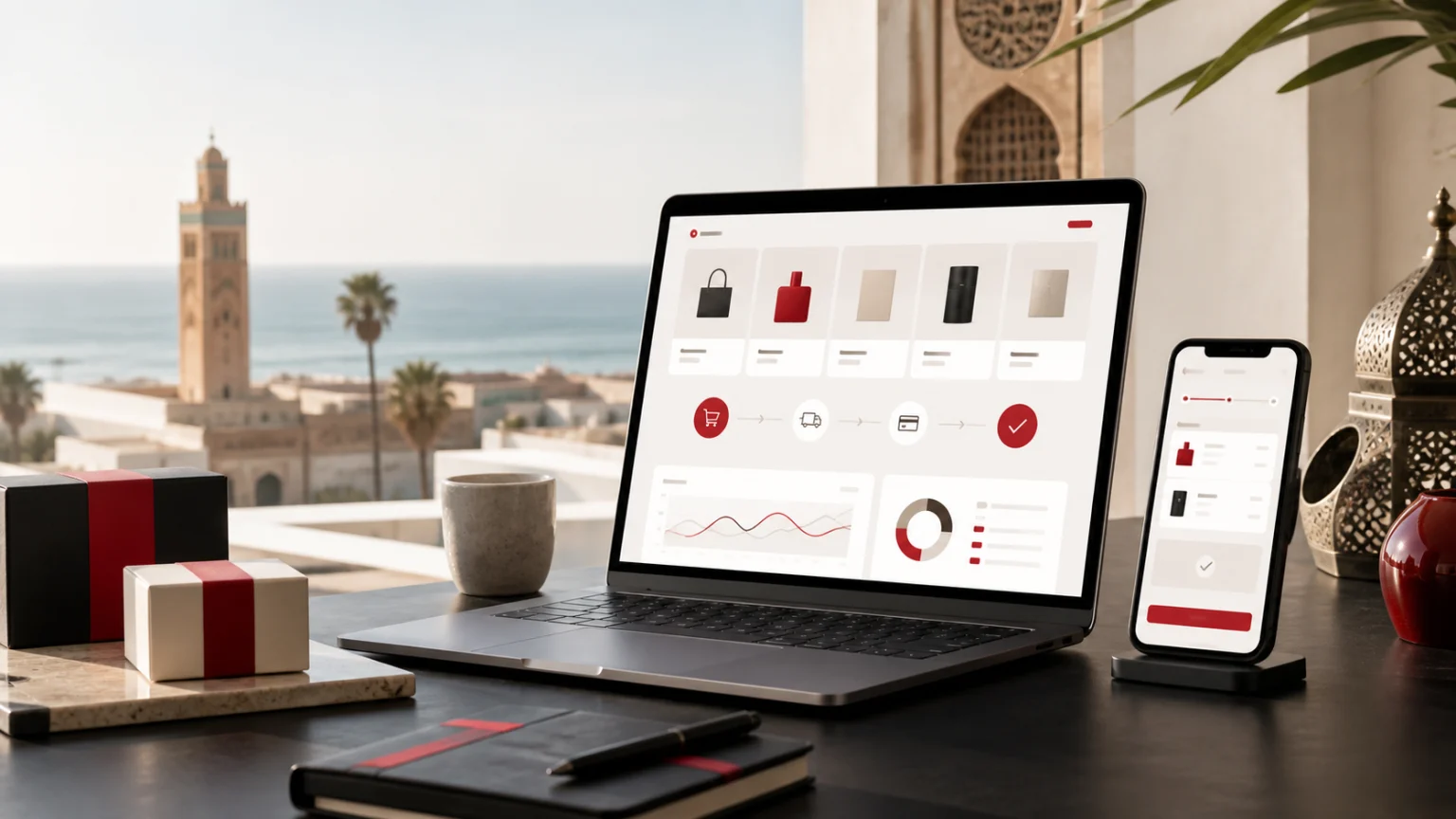
A successful online store begins with the operating model, not with a colour palette or template. A beautiful site will still lose trust when customers cannot understand sizing, delivery, payment or returns. The product promise and the order process must be designed together.
For a Rabat-based business, the experience should be mobile-first and make language, pricing, delivery areas and payment expectations explicit. The following steps focus on decisions that improve discovery, confidence, conversion and the ability to scale.
1. Define the store model before the platform
Document the number of products, variants, delivery zones, stock process, payment methods, return policy and the person responsible for fulfilment. These requirements determine whether a simple store is enough or whether integrations are justified. Launch the smallest complete buying journey and add complexity only when a real need is proven.
- Clear products and categories.
- Ownership of stock and price updates.
- Delivery and return rules.
- A support path after the order.
2. Build a structure for people and search engines
Use categories customers understand and can reach easily from navigation. Category pages should provide useful context, while product pages need accurate names, optimized images, specifications, benefits and truthful availability. Avoid copying a supplier description across many pages; distinctive information helps customers and gives each page an independent purpose.
- A stable, concise URL for each product.
- One descriptive main page heading.
- Links to the parent category and complementary items.
- A planned approach to unavailable products instead of random deletion.
3. Design a fast mobile purchase journey
Test the entire store with one hand and an ordinary connection, from entry page to order confirmation. Reduce fields, disclose expected costs before the final step and make validation errors easy to understand. Do not require an account unless it creates genuine value, and keep the cart predictable when visitors move between pages.
- Search and filters appropriate to catalogue size.
- A visible purchase action with essential information nearby.
- Few checkout steps and clear progress.
- Understandable confirmation and follow-up messages.
4. Prepare trust and measurement before launch
Make the business identity, contact routes and policies easy to find. Use HTTPS, test successful and failed payments safely, and verify every notification. Measure product views, cart additions, checkout starts and completed orders without sending sensitive personal data to analytics tools. Review consent requirements before enabling marketing tags.
- Successful and failed test orders.
- Backups and a tested recovery plan.
- Funnel measurement without duplicate purchases.
- Error and speed monitoring after launch.
Pre-launch store checklist
- Verify prices, stock, tax and delivery rules.
- Complete orders on two phones and two browsers.
- Read every policy for clarity and consistency.
- Compress images while preserving useful detail.
- Connect products to categories and relevant editorial content.
Frequently asked questions
Should the first version have a large catalogue?
Start with a scope the team can operate well. A smaller store with accurate data and a complete purchase experience is better than a large catalogue that cannot be maintained or fulfilled.
Which pages matter most after the homepage?
Category pages, product pages and checkout form the commercial core. Test them according to the most likely customer journeys rather than judging them by appearance alone.
Next step
If you want to turn these steps into a practical plan for your business, explore FoxDigia services or contact us to define the right starting point.
Explore our services · Contact us
FoxDigia Team
FoxDigia Team specializes in building brand identities, website design, digital marketing, and improving businesses' presence in Morocco and the Gulf.